
What is a data center?
A data center is a large building that houses computer servers. It requires a lot of electricity and air conditioning, because servers run very hot. There are several types and sizes of data centers.
Right now, we are most concerned about “hyperscale” data centers. These are primarily used for AI and mass surveillance. This is what Rowan and Meta are building in Temple.
The technology spies on us and analyzes our behavior so companies can find new ways to direct our thinking, make technology more addictive, and convince us to buy their products. AI is also used for military contracts and flock surveillance.
Types of data centers and typical uses
- Tier 5, hyperscale: 100+ MW. AI and surveillance.
- Tier 4, large scale: 10 to 100 MW. Crypto mining, shared hosting, emails, and most social media.
- Tier 3, enterprise: 1 to 10 MW. Single company corporate servers.
MW stands for megawatt. One megawatt is 1 million watts.
For comparison, the central air in your home uses about 3,000 watts, but only when it’s running. Data centers use the power listed above 24/7.
The case for data centers
Temple Mayor Tim Davis heavily supports the data center projects, including Rowan and Meta. He cites hundreds of high-quality jobs, massive capital investment, and a strengthened business-friendly reputation for the city, and he emphasizes that the projects are critical for bringing in tax revenue.
The City budget gets a large part of its revenue from sales and use tax. Having 500 temporary construction workers come to town, eating out at restaurants and filling hotel rooms, generates substantial income for the city, temporarily.
If they can encourage even more data center construction, they can stretch out that temporary benefit for years.
The case against data centers
Quite literally everything we’ve covered on this site. There are dozens of long-term, substantial reasons why we cannot allow these in Temple.
- Water scarcity. We are already in a drought.
- Electricity costs. They are already climbing.
- Heat island effect. Up to 16 degrees in a 6 mile radius.
- Mass surveillance. The primary use of AI data centers.
- The New Drug Cartel. See the recent Meta/Facebook lawsuit. Judgment: predatory technology aimed at children.
Needs reviewThe old site cites a Meta/Facebook lawsuit judgment here with no link, so add the case name and a source.
These systems have no redeeming value to our society. The short-term income is not worth the long-term damage to our community. We cannot buy back resources to sustain Temple.
What data centers cost you
Data centers drive up costs for citizens primarily by overloading the electrical grid. That forces utilities to invest in expensive new infrastructure, such as power plants and transmission lines (like those being installed in Salado), and those costs are passed on to homeowners and small businesses.
As AI and cloud computing fuel rapid demand growth, data centers can also cause electricity market prices to spike. Read more about who pays for new power infrastructure.
Health concerns
Health concerns related to being near large-scale (Tier 5, hyperscale) data centers are significant, primarily stemming from air pollution, severe noise, and water resource depletion.
These facilities often operate 24/7 and can function more like heavy industrial sites than typical office buildings. Recent studies estimate that data center pollution could cause hundreds of premature deaths and significant public health costs by 2030.
Needs reviewThis section cites studies estimating premature deaths, but the old site links no source, so add the study before launch.
Home values and taxes
Imagine a year from now, your house is in the center of a heat zone ten degrees higher than anywhere else. A home you spent a lot of money on, in a city you believed in.
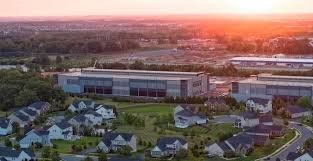
If you can get past the heat zone, in a town that has over 260 days a year in the mid 80s or higher, you also have brownouts and are in an extreme drought. What happens to your house value?
Data centers can leave and fail, and already have in Temple. Who is paying the taxes that are lost with reduced home prices, and for the empty industrial waste that depleted the county’s resources?
This is likely, and data proves it.
Needs reviewThe old site says data centers have already left or failed in Temple and that data proves this outcome, but gives no source, so add the example and the data.
Do our data center neighbors pay politicians?
Do our current data center neighbors pay politicians to approve things their constituents don’t want? See for yourself:
- Tech Cash Flows to Texas Lawmakers
- Meta Puts 65 Million into Election for Politicians Who Vote on Data Centers
- Meta PAC
Has anyone in our local government who votes on these issues taken money from Meta or Rowan? Help us find out.
Questions we want answered
We are still looking for answers to these questions. If there are questions you want answered, contact us.
- Who is Meta?
- Who is Rowan?
- What have they contributed to our community?
- What have they taken from our community?
- What have they gifted to politicians and those we call public servants?
- Is Rowan owned by Americans?
- If they are transparent, why are they hiding documents, and what are they hiding?
- What businesses are benefiting, and do they have anything to do with our decision makers?
- What have they given to politicians to vote yes, versus to our community?
- Why are we giving tax breaks to a company that has more money than most nations?
- Do they have a deposit or insurance to offset costs of ruined or depleted resources?
- Are they legally responsible for failure of contract to the citizens who must live with the consequences when they leave?
- Do they have a history of failure in data centers?
- Do they have a history of success in data centers?
- Do they have to repay the costs if they fail?
- Do economists believe they will fail soon?
- How much of our tax revenue has gone to these projects so far?
- Does Rowan have any history of a successful project?
- Who do these data centers benefit, in order from the top? It’s not hard to guess who is on the bottom.
- How are our home values going to change with the increased heat index, brownouts, and shortage of water?
- When they leave, after our resources are gone, are the taxes the city recovered going to replace the lost home values and reduced property taxes?